Why Is My Sod Turning Brown?
July 1, 2026
Category, Sod

New sod commonly turns brown when it is not receiving enough or too much water, experiencing transplant or heat stress, or failing to establish roots in the ground. Brown sod does not necessarily mean that your sod is dead, but rather needs immediate attention. In this article, we will break down why sod turns brown, how to prevent or recover sod from turning brown, and tips for maintaining a lush, green color. Siouxland Sod has experience growing and maintaining sod in Iowa, Nebraska, and South Dakota, and we understand how to ensure sod is healthy in every temperature range.
Concerned about brown Sod?
Is Brown Sod Always Dead?
Brown sod is not always dead, and it is often the case that this sod can be repaired or nursed back to life. The most important factor in preventing or saving brown sod is understanding the root cause of why it is turning brown. Below are the four main causes we at Siouxland Sod look for when determining why sod has turned brown:
- Stressed Sod: When sod is stressed, blades of grass will turn brown, while the crowns and roots will remain moist and stable. Laying sod over existing grass can also stress it as well.
- Dormant Sod: Dormant sod is reflected by a uniform tan color of the sod and does have the ability to be recovered.
- Dead Sod: Dead sod will be characterized by brittle blades of grass, dry soil, no resistance when lifted, and no further new root growth.
The Most Common Reasons Sod Turns Brown
Many of the reasons why sod turns brown are avoidable, especially with proper care and consistent effort in maintaining sod. Below are the reasons you can expect sod to turn brown, especially in Iowa:
- Insufficient watering
- Transplant shock
- Excessive watering
- Poor drainage
- Heat and wind stress
- Poor root establishment
- Compacted soil
- Fungal disease
- Sod installation gaps
- Weak or unprepared soil
- Pet urine or heavy foot traffic
- Seasonal dormancy
New Sod Is Not Getting Enough Water
Underwatering is one of the most common and persistent reasons why sod turns brown.
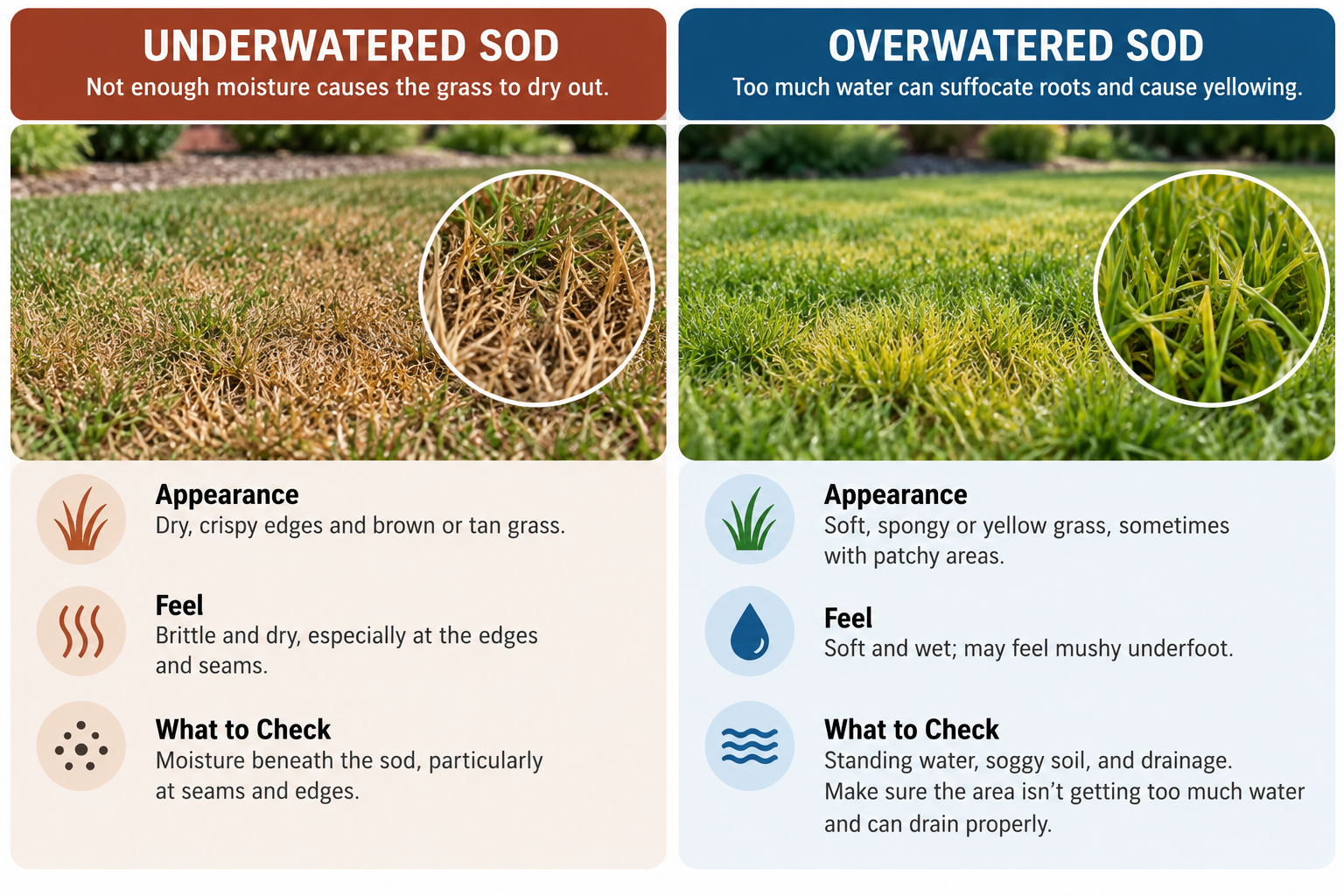
Fresh sod has shallow roots and relies on moist soil to establish and grow successfully. Signs of sod that is underwatered include:
- Dry, brittled, or curled blades
- Blue-gray grass before browning develops
- Dry soil underneath the sod
- Shrinking pieces or widening stems
- Sod that feels unusually light when lifted from the ground
- Browning along edges or elevated areas
As you can likely tell, this is the challenge faced most during summer installation, especially for types such as Kentucky Bluegrass or Tall Fescue Sod. That is why it is critical to have a plan for consistent watering for any new sod transplanted into the ground. Consistent watering does not mean a set schedule; we recommend checking the soil and irrigation to determine the need for watering, rather than relying on a set, timed schedule. This is the best way to keep sod properly watered.
Can Too Much Water Cause Brown Sod?
Overwatering causes brown sod because water saturates the soil around the sod, removing oxygen, which is needed for root establishment in sod. Excess moisture can also lead to fungal problems. New sod should remain moist, but not be sitting in consistently standing water. Signs of overwatering include:
- Songy ground
- Yellowing blades of grass
- Standing water and persistent puddles
- A sour or musty odor
- Fungal growth
- Mushy roots
- Sod that remains loose
Transplant Shock After Sod Installation
Transplant shock occurs in sod due to the harvesting, transportation, and installation of sod. This sudden change in growing conditions can cause your sod to experience shock. This is why it is important to know how much sod you may need for your yard. Recovery can vary and depends on a variety of soil and weather factors. Mild discoloration or slight browning after installation can occur and is often caused by hot, dry, or windy weather.
Proper moisture and soil recovery is crucial in this phase, and is why monitoring your sod after installation is so critical. Improvement will become visible when roots become established, and color begins to full restore. Worsening browning areas could indicate a soil or watering issue that needs to be addressed.
How To Tell If Sod Is Rooted Properly
To tell if sod is rooting properly, there are a few key things to look for. It is important to remember that sod roots establish faster when sod has even contact with loosened, moist soil. Below are the rooting signs to look for in sod:
- Early Stage: Sod lifts easily, with little root growth.
- Developing Stage: Fine white roots will begin entering the soil.
- Established Stage: Sod resists gentle tug and stays firmly attached in the ground.
- Possible Failure: Sod remains loose, dry, or is slimy and shows no new roots.
Heat Stress and Regional Summer Conditions
Heat stress in Iowa is one of the more pressing issues in the summer when it comes to growing sod. The same is true for Nebraska and South Dakota, as Midwestern summer heat, wind, sunlight, and uneven rainfall can dry newly installed sod rather quickly. This, plus the rapid weather changes in the region during the summer, can lead to both stress and poor growth if the sod is not maintained properly.
It is important during the summer to check exposed edges and sunny areas, and to do so early enough to limit evaporation through the day. Accounting for rain rather than just watering, and inspecting the grass and soil for moisture regularly is also recommended. We also recommend avoiding mowing until the sod has begun rooting. The experts at Siouxland Sod can help determine the best watering cadence for your new sod, especially for Midwest summers.
Poor Soil Preparation Before Installation
Soil preparation is vital for new sod to take root, as soil affects both moisture movement and root growth. Sowing sod is much different than seed, so be sure to avoid compacting the soil and remove rocks, debris, and old turf to ensure good soil penetration. Low spots collecting excessive water and potential high spots that will dry out should be corrected when possible. Uneven grading will create inconsistent moisture, and poor soil fertility or PH will all ruin new sod. All of this must be accounted for when laying new sod, as good soil health is key for long-term growth.
Sod Installation Mistakes That Cause Brown Spots
There are a lot of avoidable mistakes in installing sod that cause brown spots. Below are the most common we see in sod installation:
- Allowing sod rolls to dry out before installation
- Failing to stagger seams
- Overlapping sod edges
- Leaving gaps between pieces
- Installing into over-dry, compacted, or uneven soil
- Not pressing the sod into firm soil contact
- Delaying first watering
- Walking or placing equipment on saturated sod
It is important to note that straight brown lines or browning around seam points to installation and watering problems, not disease.
Sod Disease and Fungus Problems
Not every brown patch is a fungal disease. That being said, moisture, heat, poor airflow, and excessive watering can create favorable conditions for disease and fungal growth. Some possible warning signs for fungal growth are:
- Circular or irregular spreading patches
- Discolored rings around brown areas
- Matted or slimy blades
- Visible fungal growth
- Areas that continue to expand despite water correction
If you come across fungal growth or suspected fungal growth, professional evaluation is highly recommended to treat the affected area.
Pet Damage and High-Traffic Areas
Concentrated dog urine can create brown spots in new sod, sometimes with darker green growth. Foot traffic can also compress wet soil, disturb seams, and damage root establishment. Recovery options include restricting foot traffic during root establishment, redirecting pets to another area, correcting the source before replacing the area, and patching isolated dead areas with matching sod. It is also recommended to avoid aggressively fertilizing suspect urine spots.
How To Fix Brown Sod
Below are the steps we recommend for fixing brown sod.
- Evaluate Moisture Levels: Check the grass, seams, and soil beneath sod. Determine whether it is dry, saturated with water, or evenly moist.
- Check Root Development: Perform gentle tug tests and look for fine roots growing in the soil.
Adjust the Watering Schedule: Increase or decrease irrigation based on actual soil moisture, weather drainage, and the sod’s establishment stage. - Correct Soil or Installation Problems: Address any standing water, air pockets, or poor soil contact with the sod. Also correct any gaps or severely compacted areas.
- Protect the Recovering Area: Limit mowing, pets, and foot traffic until the sod is rooted.
- Monitor for Improvement: Look for new green growth, strong rooting, and patches of browning to stop expanding. Seek professional help from Siouxland Sod if conditions worsen.
Brown Sod Troubleshooting Chart
| Symptom | Likely Cause | What To Check |
|---|---|---|
| Dry, crispy edges | Underwatering | Moisture beneath seams and edges |
| Soft or yellow grass | Overwatering | Standing water and drainage |
| Straight brown seams | Dry edges or installation gaps | Spacing and irrigation coverage |
| Circular spreading patches | Possible disease | Pattern, moisture, and fungal signs |
| Small isolated spots | Pet urine | Pet activity and spot pattern |
| Brown areas on high ground | Uneven watering | Grading and sprinkler coverage |
| Uniform seasonal browning | Dormancy | Living crowns and seasonal conditions |
| Sod lifts easily | Poor root development | Soil contact and root growth |
How Long Does It Take Brown Sod To Recover
How long it takes brown sod to recover depends on the level of stress to the sod. Below are the stress levels you will see and how long it will take for recovery for each.
- Minor stress: Color may begin returning once moisture or heat stress is corrected.
- Moderate stress: Recovery will require sustained care and new blade growth for weeks
- Severe stress: Dead crowns or failed roots will not recover and will require new patching
- Dormancy: Grass will remain brown until favorable seasonal conditions return
How To Prevent Brown Sod in the Future
Fixing brown sod is one skill, but preventing it is a whole other one. Below is what you can do to prevent brown sod in the future:
- Install fresh sod promptly for delivery
- Store fresh sod properly
- Prepar, loosen, and grade soil before installation
- Maintain even moisture during establishment
- Check seams and edges for drying
- Adjust irrigation for rain, heat, wind, and soil conditions
- Limit traffic until roots develop
- Follow seasonal fertilization and maintenance plans
- Choose sod suited to the site’s sunlight
- Mow only after the sod has begun rooting
Common Mistakes During The First 30 Days
The first 30 days of growing sod are arguably the most crucial for long-term health and growth. Below are the common mistakes we advise avoiding in the first 30 days:
- Following the same watering schedule, regardless of weather
- Watering the surface without moistening soil below
- Keeping the ground continuously saturated
- Allowing seams and edges to dry out
- Mowing before roots fully establish
- Cutting off too much grass at once
- Allowing heavy traffic too soon
- Applying fertilizer without diagnosing the problem
- Allowing heavy traffic too soon
- Assuming every brown patch is a disease
Why Property Owners Choose Siouxland Sod
Locally grown, freshly harvested sod is better suited to the regional conditions of the Midwest. Siouxland Sod’s experience of serving homeowners, landscapers, builders, property managers, and athletic facilities throughout Iowa, Nebraska, and South Dakota is the key to our work and why we are trusted with all sod installation.
FAQs
Why is my new sod turning brown after installation?
New sod turns brown due to insufficient watering, excessive moisture, transplant shock, heat stress, poor soil contact, or delayed root establishment.
Is brown sod dead or dormant?
No, not all brown sod is dead or dormant. Stressed or dormant sod will appear bwon but have alive crowns. Concerned about brown Sod? Contact our team at Siouxland Sod today!roots, while dead sod is typically dry, brittle, and shows no new growth.
Can brown sod turn green again?
Yes, brown sod can recover if the roots and crowns remain alive as long as the source of the stress is corrected. Sod with dead roots or crowns needs to be re-sodded.
How often should I water new sod?
New sod should be kept consistently moist, so adjusting your watering based on soil moisture, weather, and drainage is key.
Can overwatering cause brown sod?
Yes, excessive watering deprives the soil of oxygen, delaying root establishment. This can also lead to the growth of fungus within your garden.
How long does it take sod to root?
Sod generally roots shortly after installation, but full establishment varies with soil health, moisture, sod variety, and weather conditions.
Will fertilizer help brown sod recover?
Fertilizer only helps brown sod recover if there is a nutrient deficiency. Fertilizer will not address issues with watering, dead roots, or poor soil health.