How To Fix Patchy Sod After Installation
August 1, 2026
Category, Lawn Care

After installing sod, it is normal to see uneven sod growth as the sod adjusts to its new environment. Seeing patchy sod does not automatically mean the sod is dead; it could simply be adjusting to installation. It is important to identify the underlying cause of patchy sod before applying water, fertilizer, seed, or replacement sod. In this article, we will break down how to identify these causes and when action is needed.
Get Expert Sod Recommendations
Why Is My Sod Patchy After Installation?
Sod can be patchy after installation for a variety of reasons. Below are the most common reasons to look for when it comes to patchy sod:
- Uneven watering or sprinkling coverage
- Compact or improperly graded soil
- Poor root-to-soil contact
- Heat, wind, or drought stress
- Delayed root establishment
- Excessive foot or equipment traffic
- Different levels of sun or shade
- Gaps, overlaps, or other installation errors
- Natural transplant stress during establishment
How To Tell If Patchy Sod Is Healthy
There are a couple of telltale signs to look for when it comes to determining whether patchy sod is actually healthy. Below are the common signs to determine if your patchy sod is healthy and does not require further work.
Look For Green Growth
- Green shoots emerging from brown or pale grass
- New growth along sod seams
- Color gradually returning after watering
Perform a Gentle Tug Test
- Gently lift one corner of the sod
- Resistance indicates roots are entering the soil
- Sod that lifts easily may need more time or improved soil contact
Check The Soil Moisture
- Check beneath the sod rather than judging the surface alone
- The sod and upper soil should feel consistently moist but not saturated
- Note signs of standing water, mud, or completely dry soil
Watch For Signs Of Recovery
- Increasing resistance during the tug test
- New blade growth
- Improving color
- Patch boundaries becoming less noticeable
Uneven Watering Is The Most Common Cause
New sod requires consistent moisture during installation and throughout the process. Dry corners, edges, seams, and areas between sprinkler patterns need to be monitored and watered as needed. Slopes can shed water, preventing penetration, so it is important to compare any underwatered sections against overwatered sections. We recommend checking your sprinkler coverage and adjusting its position, duration, or frequency based on soil and sod conditions. It is important to address areas of the lawn directly rather than overwatering the entire lawn when dry patches occur.
Poor Soil Preparation Before Installation
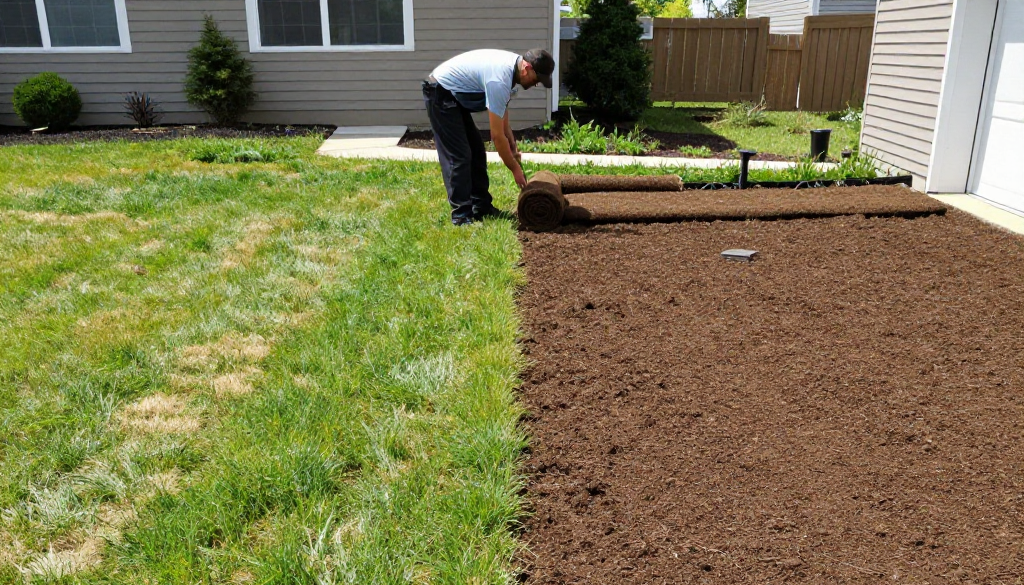
Poor soil preparation can kill any sod installation, so it is important to avoid this common mistake. Below are the obstacles to avoid when preparing your soil for sod installation and to prevent patchy areas.
Can You Lay Sod Over Existing Grass
Compacted Soil
Compacted soil restricts root penetration and limits the movement of water. This is especially common around new homes, construction sites, and heavily traveled areas.
High and Low Spots
High spots will often dry faster, while low spots can collect water and remain saturated. Uneven grading can create visible differences in sod growth and can be very unsettling or damaging to proper sod establishment.
Poor Root-To-Soil Contact
Air pockets prevent roots from reaching the soil and, therefore, from getting much-needed moisture. Loose edges, wrinkles, debris, and uneven soil can create separation. Careful rolling or pressing of sod to ensure soil contact can be very beneficial to successful root establishment.
How Heat And Weather Affect New Sod
Recently harvested sod loses moisture faster than established lawn grass. High temperatures, direct sunlight, strong wind, and drought will all affect new sod much more significantly than established lawns. It is important to note that shaded sections will also retain more moisture, which slows establishment. Rapid weather changes across Iowa, Nebraska, and South Dakots is notorious for affecting new sod. Checking moisture frequently and adapting your watering schedule accordingly is critical for establishing new sod during heat and poor weather.
Why Is My Sod Not Rooting Properly?
Below are the key factors as to why your sod may not be rooting properly, and what to look for in terms of sod and its rooting timeline.
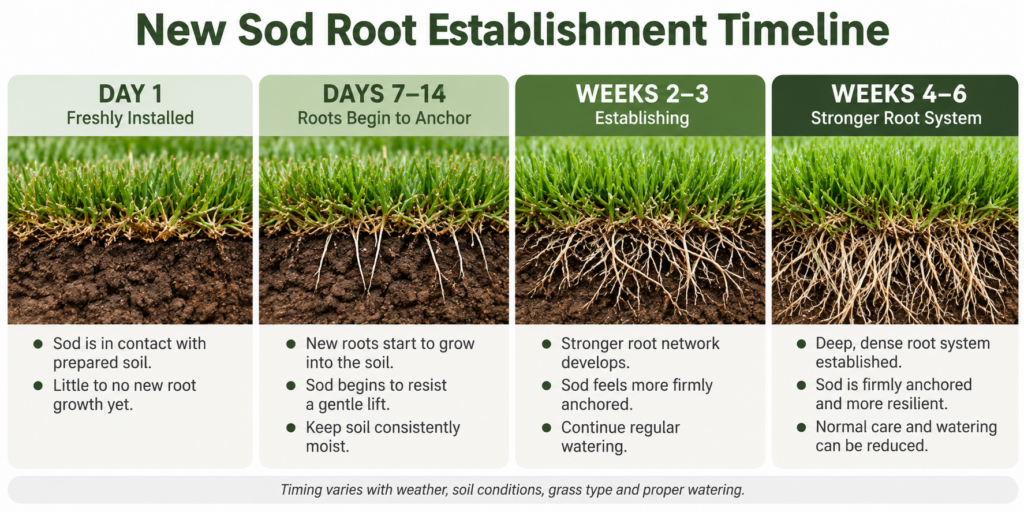
Typical Root-Establishment Timeline
- First several days: Sod is highly dependent on frequent moisture.
- Around two weeks: Early resistance may be noticeable during a tug test.
- In the following weeks, roots should become stronger and deeper.
- Weather, grass variety (Kentucky Bluegrass or Tall Fescue), soil conditions, and season can change the timeline.
Common Causes of Poor Rooting
- Excessive water and oxygen-starved soil
- Compacted soil
- Soil allowed to dry beneath the sod
- Excessive traffic
- Inadequate soil contact
- Heat stress
- Sod installed after sitting too long
How To Encourage Root Development
- Maintain even moisture without creating standing water
- Keep people, pets, and equipment off the area
- Improve contact between sod and soil
- Avoid mowing until sod resists gentle lifting
- Correct drainage or grading problems promptly
How To Fix Patchy Sod
Below are the steps we recommend for fixing patchy sod.
Step 1: Identify the Cause
Inspect the color, moisture, rooting, sprinkler coverage, soil contact, and drainage of the sod. Also, be sure to compare the affected patch with the healthy areas around it.
Step 2: Adjust the Watering Schedule
Give dry areas supplemental water, and reduce water where soil remains saturated. Also, be sure to correct any sprinkler gaps or overlaps, and recheck moisture levels below the sod daily during early establishment.
Step 3: Improve Soil Contact
Press or roll loose sections carefully, and fill minor voids beneath lifted pieces of quality soil. Avoid leaving air pockets under the sod.
Step 4: Address Drainage Issues
Redirect runoff where possible, and be sure to correct small low spots that collect water. It is important to seek professional help for significant grading or drainage failures.
Step 5: Reduce Foot Traffic
Keep people, pets, mowers, and equipment away from weaker areas. Additionally, prevent sod pieces from shifting before they root.
Step 6: Monitor Recovery
Photograph problem areas for comparison, and be sure to repeat tug and moisture tests. Look for new growth over the following one to three weeks, and avoid making several aggressive treatments at once.
When To Patch Small Areas
Use spot repairs for any isolated dead or badly damaged sod sections. It is important to cut out the failed area with clean, straight edges. Also, be sure to loosen and level the exposed soil, and install a matching piece of fresh or properly stored leftover sod. Press it firmly into place, and be sure to water it immediately. Plugs can be used for small areas where the grass variety spreads laterally. Be sure to keep seams tight without overlapping surrounding turf when patching.
When To Replace Sections Of Sod
Replacement of sod is recommended when:
- Sod is completely brown, brittle, and shows no green growth
- Sections remain loose and develop no roots
- The sod has severely shrunk, curled, or separated
- Major soil-preparation or installation failures cannot be corrected in place
- Disease or decay has destroyed the turf
- Patches show no meaningful response after watering and correcting the cause
Can Fertilizer Fix Patchy Sod?
Fertilizer cannot correct dry soil, poor sod-to-soil contact, or compaction. It only really helps when nutrients are the limiting factor in growth. Excessive nitrogen can stress or burn new sod, so ensuring starter fertilizer is used during the recommended installation windows and under specific soil conditions is important. We encourage following your sod producer’s guidance on fertilizer use and avoiding fertilization of any severely drought-stressed sod.
How Long Does Patchy Sod Take To Recover?
Let’s take a look at how long it generally takes for patchy sod to recover, based on typical timelines.
During The First Two Weeks
Uneven coloring can occur during initial transplant adjustment. Moisture and soil contact are the main priorities during this period. Early rooting should begin in this window under favorable conditions.
By 30 Days
Healthy sections should show stronger roots and active growth. Minor color differences may still remain in this time window. Persistent bare or loose areas will require closer inspection after 30 days.
By 60 Days
Most successfully established sod should start to appear increasingly uniform after 60 days. Remaining severe patches may need repair or replacement at this time. Recovery will take longer if there is heat drought, cold weather, or other unfavorable weather conditions.
How to Prevent Patchy Sod In Future Installations
Below are the steps to take in order to prevent patchy sod spots in future sod installations:
- Remove existing vegetation and debris
- Loosen compact soil
- Create a smooth, level installation surface
- Correct grading and drainage problems
- Choose high-quality sod suited to the property
- Install sod promptly after delivery
- Stagger seams and keep pieces tightly fitted
- Establish complete sprinkler coverage
- Monitor moisture beneath the sod
- Limit traffic until rooting is established
- Consider professional installation for larger or more complex sites
Patchy Sod Vs. Dead Sod
| Symptom | Recoverable Sod | Dead Sod |
|---|---|---|
| Color | Pale, yellow, or partly brown with some green | Uniformly brown, gray, or straw-colored |
| Root Development | New roots forming or increasing tug resistance | No roots and sod lifts freely |
| Response To Water | Color or firmness improves | No meaningful response |
| Growth Activity | Green shoots appear | No active growth |
| Replacement Needed | Usually, not immediately | Often required after confirming failure |
Why Property Owners Choose Siouxland Sod
Property owners choose Siouxland Sod because our sod is suited to regional conditions, and our fresh harvesting ensures dependable, successful delivery. Our experience in South Dakota, Iowa, and Nebraska, along with our support for our different client types, makes us experts in the area of sod in this region. We offer solutions for both residential and commercial clients and offer guidance on every aspect of sod, from installation to repairs and replacement. Siouxland Sod is trusted for the above and the excellent customer service we provide.
Frequently Asked Questions
Why does my new sod look patchy?
The main causes of patchy sod include moisture, variable soil contact, transplant stress, heat, shade, drainage, and differences in rooting.
Will patchy sod fill in on its own?
Stressed but living sod may recover if the underlying problem is identified quickly. Dead or severely damaged sections will require patching.
Can I seed patchy areas in new sod?
Matching sode is usually better for immediate and uniform repairs. Seeding may produce mismatched color or texture and requires different establishment care.
Should I fertilize patchy sod?
Only when nutrients are deficient in the sod and this is the likely limitation should you fertilize sod. Fertilizer will not solve watering, drainage, or soil-contact problems.
How do I know if sod is rooting properly?
Use the tug test and look for resistance, new root growth, stable seams, and active blade growth.
Can overwatering cause patchy sod?
Yes, saturated soil can limit oxygen, slow root growth, encourage disease, and create yellow or weak sections.
When should patchy sod be replaced?
Replace areas that are dead, brittle, unrooted, or unresponsive after moisture, contact, and drainage problems have been corrected.
Struggling With Patchy Sod?
Early diagnosis and action can save uneven and patchy sod. That being said, you need to understand what to look for. Moisture, rooting, soil contact, and drainage must all be checked before determining whether the sod must be replaced. Siouxland Sod’s regional experience and team of professionals are here to help you determine if your patchy sod can be saved and, if not, how best to replace it.